Two plates, as made
Paris
Both are labeled street photograph. Read what each actually shows.
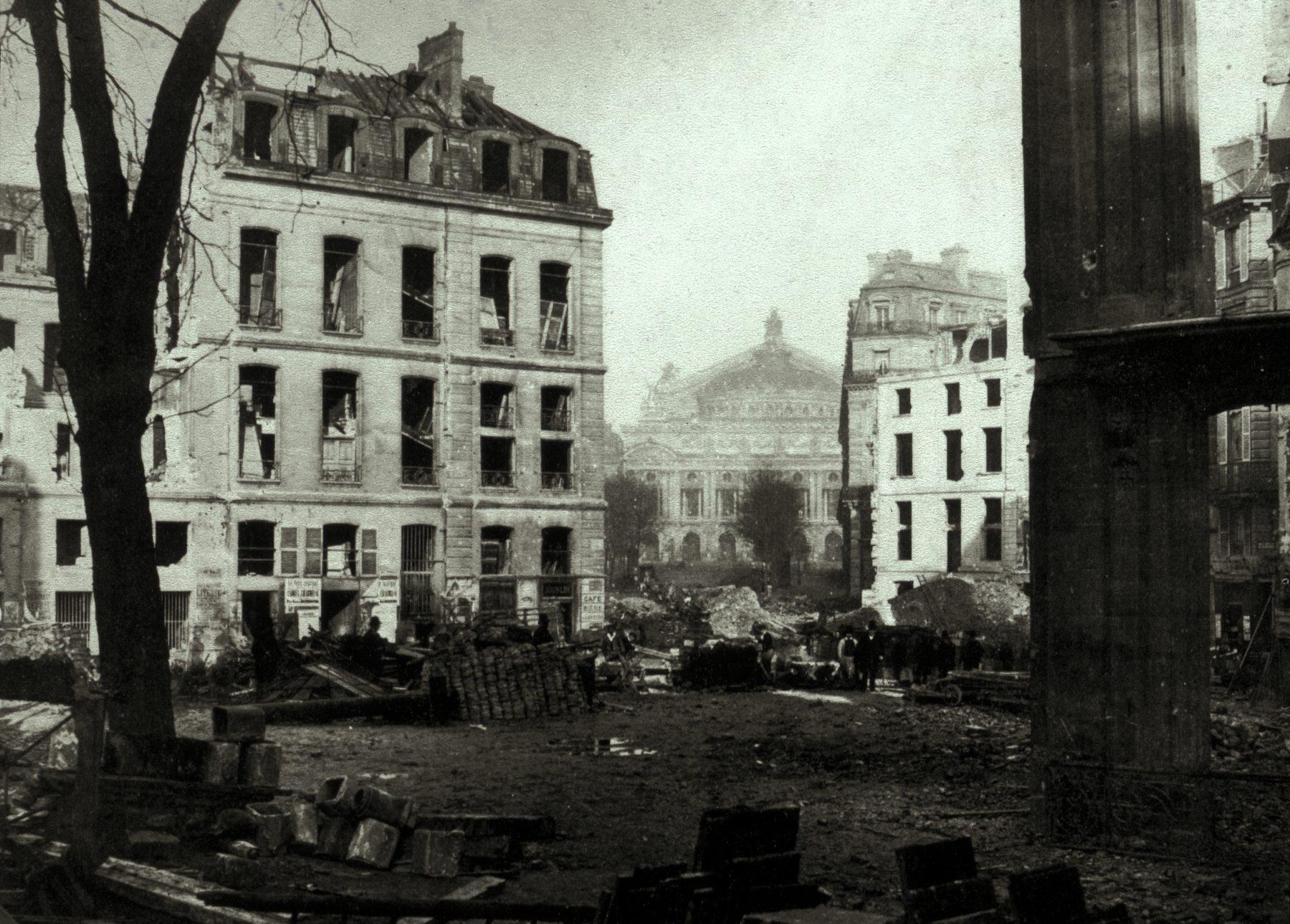
c. 1877·Paris
Avenue de l’Opéra — demolition
Charles Marville
Street photograph
What this plate shows
The cut for the Avenue de l’Opéra: a street of houses opened, timber shores, rubble, a camera standing in the demolition. Marville recorded what Haussmann’s boulevards destroyed. Street photography of unmaking. Not an overview of Paris.
- Image type
- Street photograph
- Source
- J. Paul Getty Museum / Brown University Library; Wikimedia scan.
- License
- Public domain.
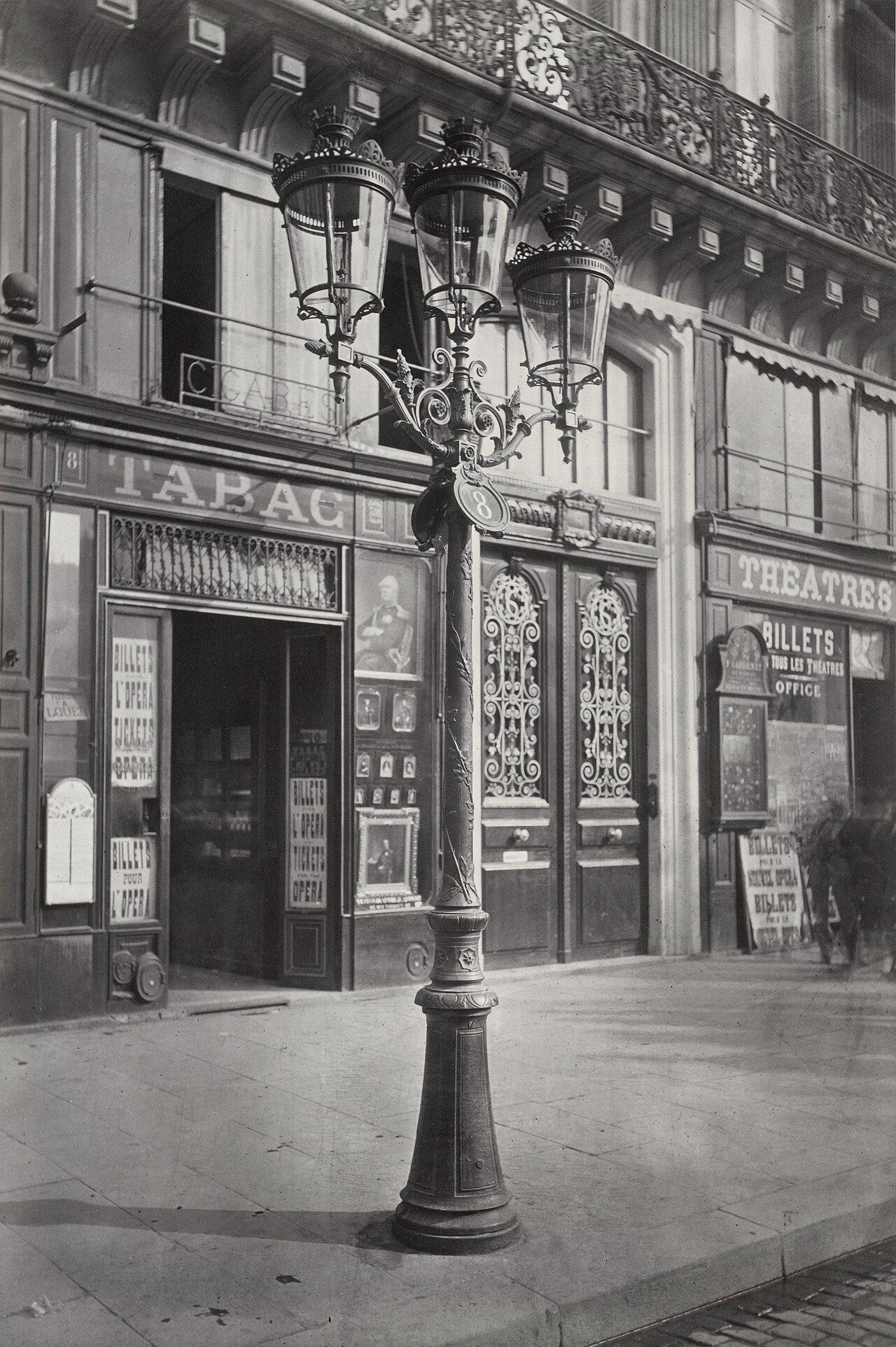
c. 1878·Paris
Avenue de l’Opéra, toward Palais Garnier
Period photograph of the completed avenue. Marville photographed the new cut in 1877–78; others issued similar views. Photographer of this specific scan is not fixed on the file.
Street photograph · Surviving
What this plate shows
The new avenue photographed looking toward Palais Garnier: a wide paved cut, a horse tram, kiosks, façades lining a street that had not existed a few years earlier. A camera on the finished boulevard. Set it beside Marville’s demolition plate. One is the cut. This is what occupied the cut afterward.
- Image type
- Street photograph
- Structure
- Avenue de l’Opéra (Palais Garnier at the far end)
- Region
- Europe
- Documented completion
- Avenue opened 1877; Palais Garnier 1875.
- Architect
- Charles Garnier (the opera). The avenue is Haussmann’s cut.
- Present status
- Surviving — The avenue and the opera still stand. This plate is the street after the demolition Marville recorded, not the demolition itself.
- Source
- Wikimedia Commons scan of a period photograph looking down Avenue de l’Opéra toward Palais Garnier.
- License
- Public domain (nineteenth-century photograph).