04Paris
Paris — Avenue de l’Opéra
Marville recorded the cut. A later camera recorded the new avenue looking toward Palais Garnier. A photograph of the streets that stood there before the cut is not in this archive. The hole stays.
Cutting of Avenue de l’Opéra. c. 1853–77. Haussmann’s cut for the avenue that opens on Palais Garnier. Marville’s plate is the demolition. The later street photograph is the avenue in use. Do not treat them as the same moment.
Beforebefore
The streets that were cut
Gap recorded
No photograph of the streets demolished for this exact avenue is in this archive yet. Place Dauphine is a different island. Do not slide it here to close the hole.
Eventc. 1877
Photograph of the demolition
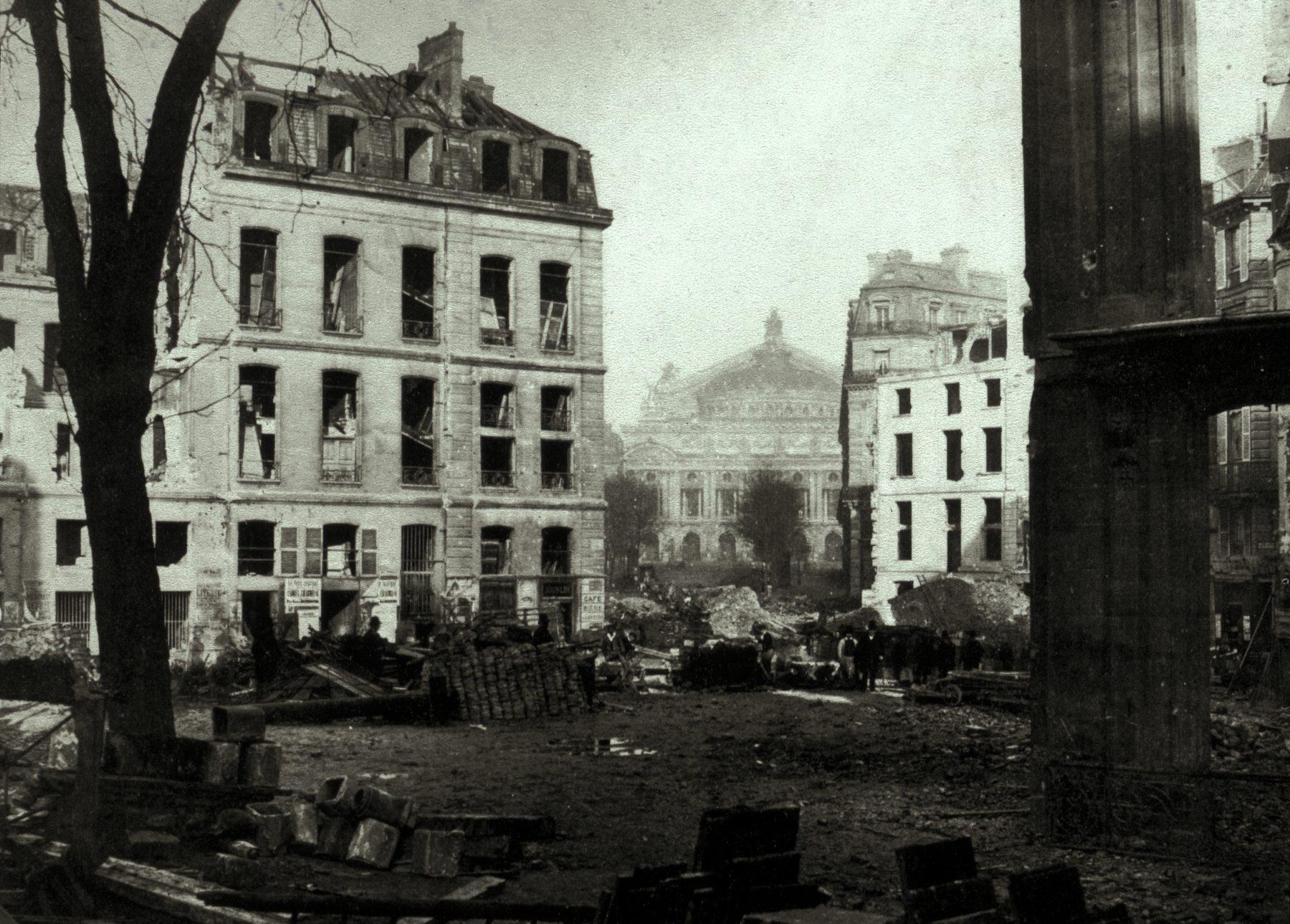
c. 1877·Paris
Avenue de l’Opéra — demolition
Charles Marville
Street photograph
What this plate shows
The cut for the Avenue de l’Opéra: a street of houses opened, timber shores, rubble, a camera standing in the demolition. Marville recorded what Haussmann’s boulevards destroyed. Street photography of unmaking. Not an overview of Paris.
- Image type
- Street photograph
- Source
- J. Paul Getty Museum / Brown University Library; Wikimedia scan.
- License
- Public domain.
Afterc. 1878
The new avenue, toward the opera
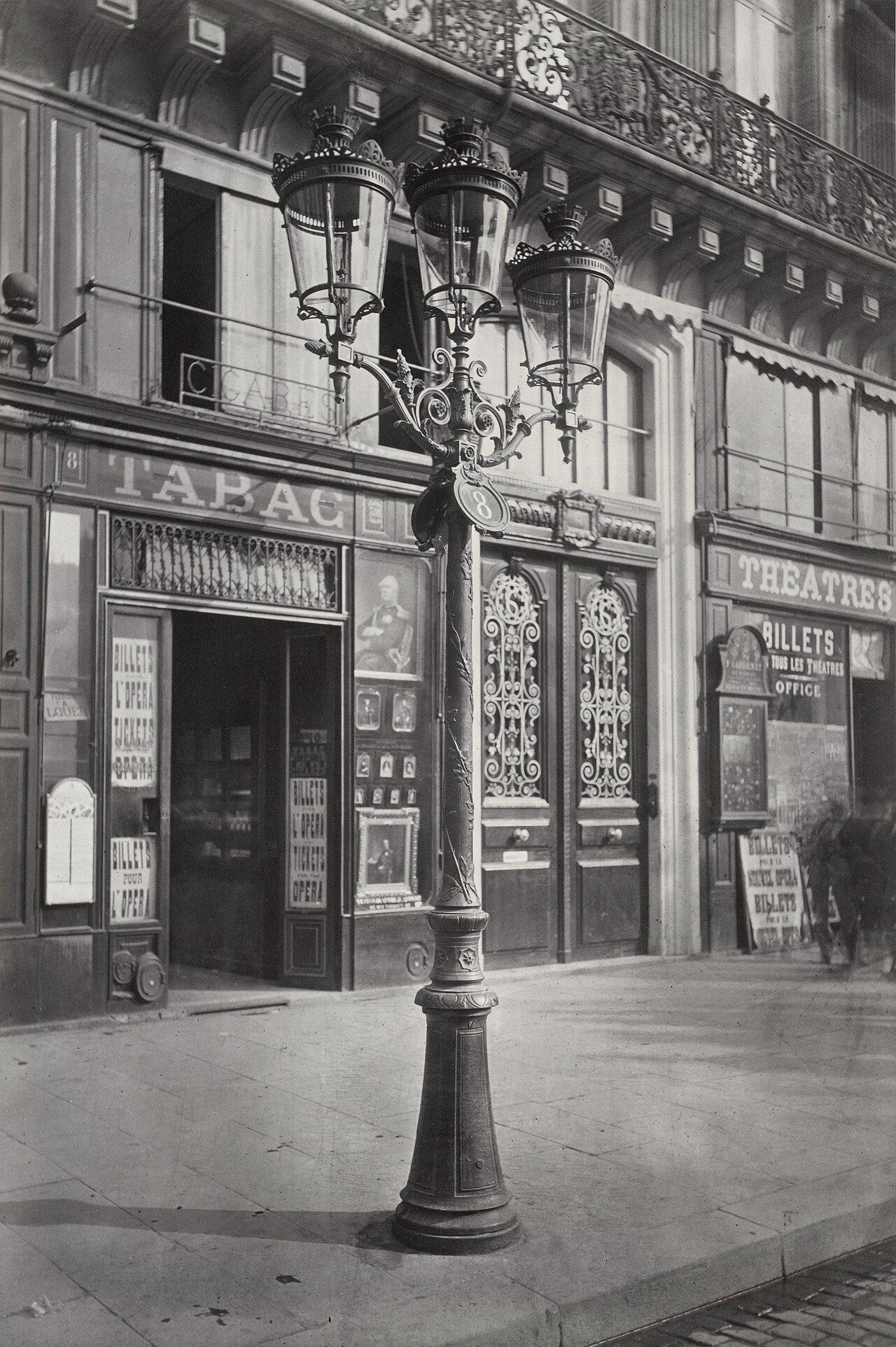
c. 1878·Paris
Avenue de l’Opéra, toward Palais Garnier
Period photograph of the completed avenue. Marville photographed the new cut in 1877–78; others issued similar views. Photographer of this specific scan is not fixed on the file.
Street photograph · Surviving
What this plate shows
The new avenue photographed looking toward Palais Garnier: a wide paved cut, a horse tram, kiosks, façades lining a street that had not existed a few years earlier. A camera on the finished boulevard. Set it beside Marville’s demolition plate. One is the cut. This is what occupied the cut afterward.
- Image type
- Street photograph
- Structure
- Avenue de l’Opéra (Palais Garnier at the far end)
- Region
- Europe
- Documented completion
- Avenue opened 1877; Palais Garnier 1875.
- Architect
- Charles Garnier (the opera). The avenue is Haussmann’s cut.
- Present status
- Surviving — The avenue and the opera still stand. This plate is the street after the demolition Marville recorded, not the demolition itself.
- Source
- Wikimedia Commons scan of a period photograph looking down Avenue de l’Opéra toward Palais Garnier.
- License
- Public domain (nineteenth-century photograph).
How to read this chain
Image type first. Then the date. Then what the plate actually shows. A later status — surviving, burned, demolished, replaced — is a documented fact about the structure, not a claim this photograph was asked to prove. The Living Realm sits downstream, in Synthesis.